
About AskHumans
Built in Washington DC for the people analytics teams who do the actual listening.
AskHumans clusters open-ended employee answers into themes weighted by who is affected. We built it because the gap between "asking employees" and "understanding what they actually wrote" has not closed, despite years of investment in survey platforms and engagement score dashboards that never had to read a sentence.
Most companies ask the right questions. Almost none can read the answers.
The core problem is not survey fatigue or low participation. It is the gap between collection and comprehension. A 4,000-response pulse survey produces thousands of text fragments that contain the organization's actual concerns, the specifics behind the scores, and the distinctions between what different groups experience. Almost none of it gets read at scale.
The standard alternatives (keyword counting, analyst sampling, executive summary by committee) all lose something important. Keywords miss the sentence-level context that distinguishes "management clarity" from "management trust." Sampling introduces selection bias toward the comments that confirm existing assumptions. Summary by committee inherits whoever is doing the summarizing.
AskHumans is a system designed to read the whole response set and weight it by who is most affected. It is not a general AI summarizer applied to HR data. It does not produce a word cloud or a ranked keyword list. It is an NLP pipeline built specifically for the structure of employee survey text and the organizational metadata, role, department, tenure, that makes the weighting meaningful.
The Team
Built by people who have spent years in the weeds of qualitative data.
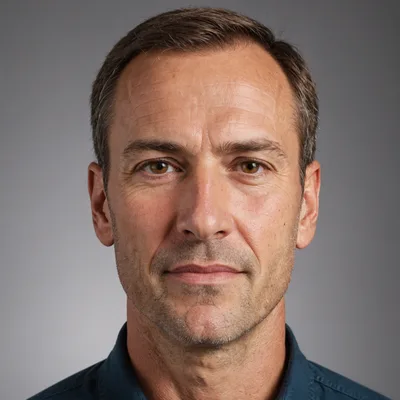
Zak has spent the better part of his career thinking about how organizations make sense of workforce data, specifically the gap between what survey platforms collect and what people analytics teams can actually use. His focus has been on the product and system design side of open-text processing: what does a decision-useful output look like, and what architecture gets you there reliably at scale.
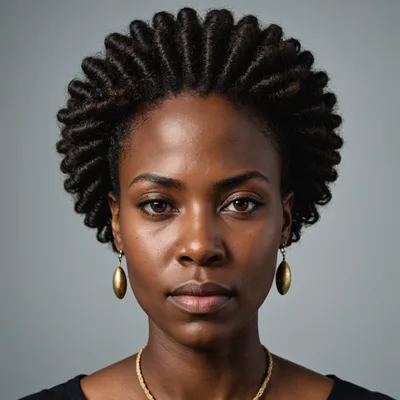
Miriam brings a qualitative research background to product design. She spent years working with HR technology teams on internal communications platforms where understanding what employees wrote (not just how many wrote) was the design constraint. She focuses on the interface between the clustering engine and the people who need to act on its output.

Tariq's work sits at the intersection of natural language processing and text classification at scale. He has spent years building topic modeling systems and text clustering pipelines, with a particular focus on the challenges that short, multi-topic, colloquial text creates for standard approaches. He leads the architecture of the clustering and weighting engine.
Washington DC
Washington DC is a natural home for a people analytics company. The DC metro area houses a high density of organizations that run serious employee listening programs: federal agencies, large non-profits, trade associations, think tanks, and the contractors and professional services firms that work alongside them. These organizations ask large numbers of people carefully designed questions and then struggle to read the answers. That is exactly the problem AskHumans is built for.
Being based here shapes the product's orientation: decision makers in DC environments tend to be policy-minded, comfortable with data complexity, and impatient with outputs that don't connect clearly to action. That is the bar we hold the output to.
1015 15th Street NW, Suite 600
Washington, DC 20005